In tank fabrication, surface preparation is one of those steps that quietly determines whether a coating system succeeds or fails. Invisible contaminants on the metal surface can undermine the entire structure. Soluble salts, particularly aggressive chloride ions, are infamous for causing premature coating failure and aggressive corrosion.
Chloride tests pinpoint the exact ions responsible for rapid steel degradation. Understanding how to find and eliminate these ions is essential for building durable industrial equipment.
The Impact of Chlorides on Storage Tanks
Chloride contamination is often invisible. A steel tank can look clean, meet visual standards, and still carry enough salts to trigger premature coating breakdown. Even after abrasive blasting, chloride ions can remain trapped in the microscopic pits of carbon or stainless steel. Once trapped beneath a lining or coating, chlorides attract moisture, leading to blistering, osmotic effects, and ultimately corrosion. For tank fabricators this is a risk that can’t be ignored.
Why Chloride Testing Is Used
In modern custom tank fabrication, chloride testing is often part of quality control before lining and/or coating application. It helps verify that the surface meets project specifications and reduces the chance of corrosion barrier failure later in service. For clients investing in long-term performance, this step is just as critical as the coating itself.
Chloride testing is particularly important in environments where tanks are exposed to marine air, salts, or other process contaminants.
How to Perform a Chloride Test
Field testing for chlorides is straightforward when using a dedicated extraction kit. Unlike automated conductivity meters, the chloride test specifically isolates and measures chloride ion concentrations. Here is a step-by-step guide to conducting the test:
- Prepare the Extraction Sleeve
Take the specialized latex sleeve and pour the provided proprietary extraction liquid inside. This fluid is formulated to lift salts from the metal effectively. - Attach to the Surface
Peel the protective backing off the adhesive collar on the sleeve. Press it firmly against the steel surface. Massage the edges to ensure a watertight seal so no liquid escapes. - Extract the Contaminants
Massage the liquid against the metal for two to three minutes. This physical action pulls the aggressive chloride ions out of the steel’s pores and suspends them in the solution.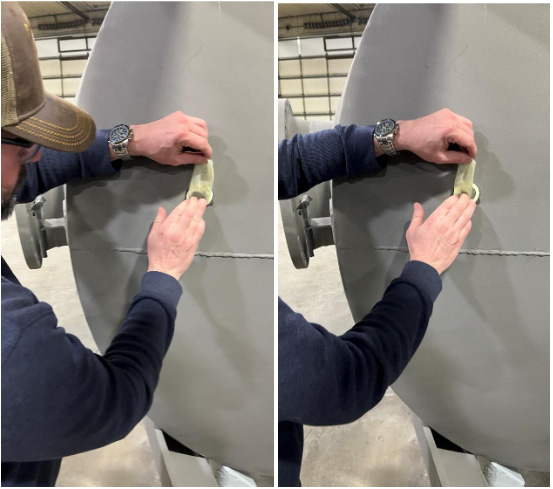
- Perform the Titration
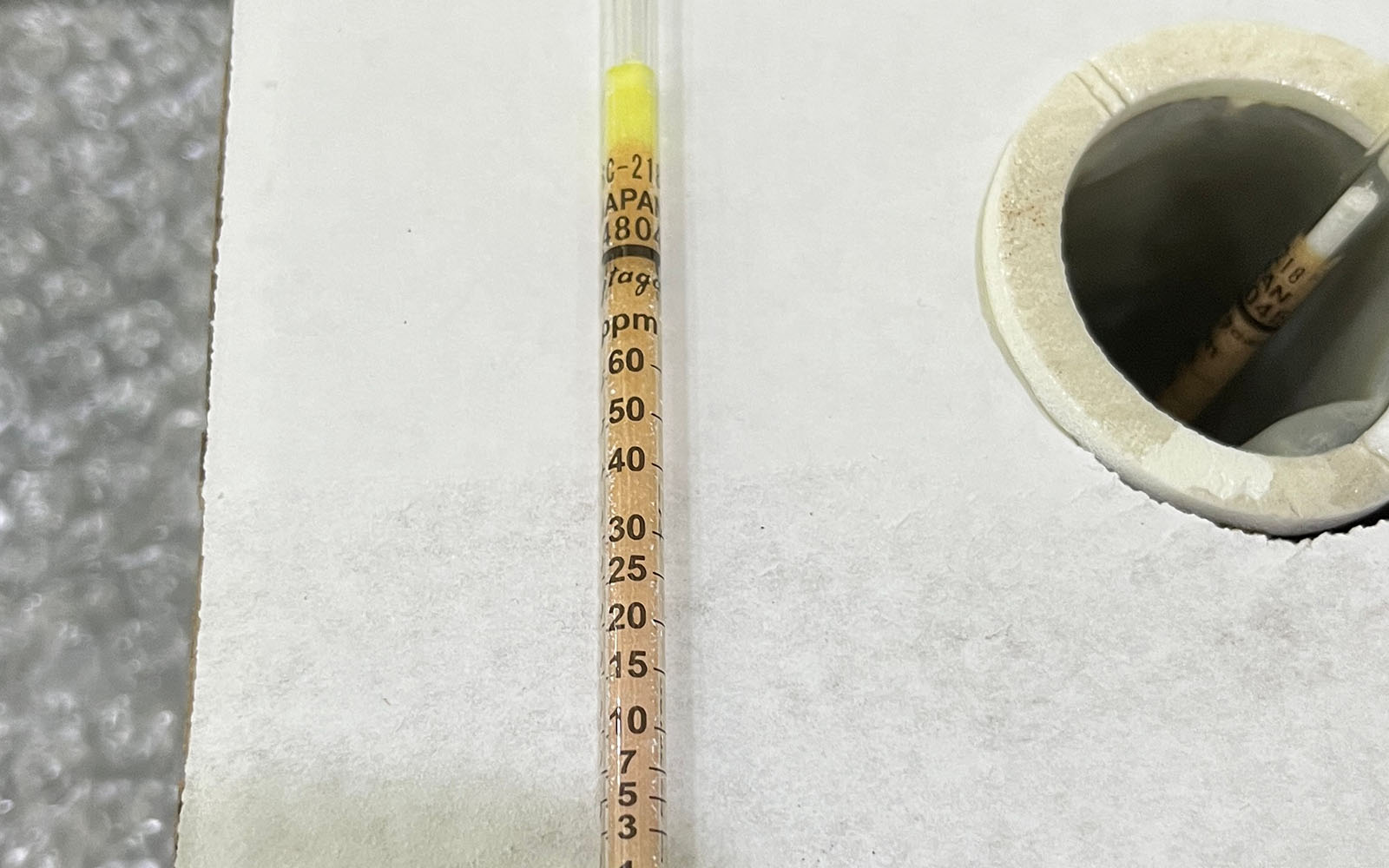
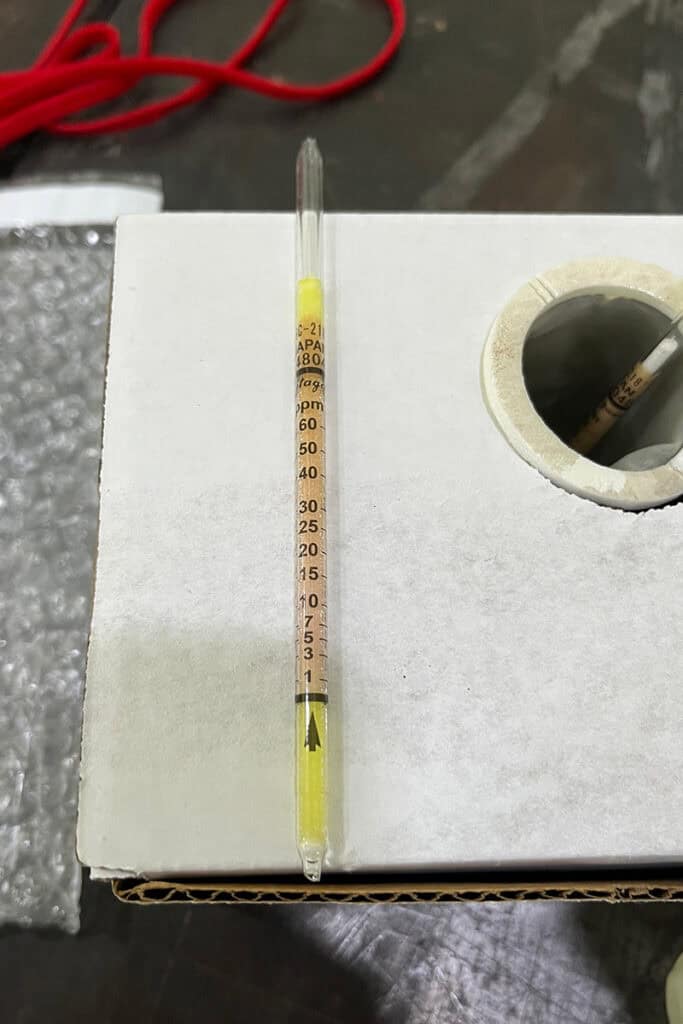
Remove the sleeve carefully to retain the liquid inside. Snap off both ends of the glass titration tube and insert the bottom end into the extracted solution. The liquid will slowly wick up the tube. It will change color based on the exact concentration of chlorides present in the liquid.
Interpreting Results and Mitigation Strategies
Reading the results is as simple as checking the color change on the titration tube’s printed scale. The reading typically displays the concentration in parts per million (ppm) or micrograms per square centimeter.
If the test reveals chloride levels above the specified project limits, you must take immediate mitigation steps. Standard dry abrasive blasting will not remove these salts. Instead, tank fabrication teams use specialized chemical wash solutions or high-pressure water jetting mixed with soluble salt removers.
After washing and thoroughly drying the surface, perform another chloride test. You must verify the surface is completely clean before proceeding with any coating application.
Why Choose Abtrex for Your Custom Tank Fabrication
Failing to detect chloride contamination is a costly mistake. By implementing rigorous testing protocols, you protect your assets from hidden corrosion and extend their operational lifespan. Ensure your team integrates the chloride test into their standard quality assurance checklist before applying any primers or coatings.
As experienced custom tank fabricators, we take pride in delivering high quality, corrosion-resistant storage tanks tailored to your specifications. When you choose our team, you benefit from a commitment to rigorous surface preparation, thorough chloride testing, and expert craftsmanship at every stage. Contact us today to discuss your next custom tank fabrication project and see how we can help you achieve long-lasting, reliable results.