Abtrex combines skilled welding expertise with advanced automation to deliver consistent, repeatable weld quality for production and repeat-manufacturing projects.
For customers producing recurring assemblies, fabricated components, or high-volume weldments, consistency and schedule performance are often just as important as the weld itself. Our automation-enhanced welding capabilities help maintain repeatable quality, support production demand, and provide reliable delivery schedules without compromising craftsmanship.
Whether you need dozens of parts or thousands of identical weldments over time, Abtrex has the processes and capacity to support your manufacturing requirements.
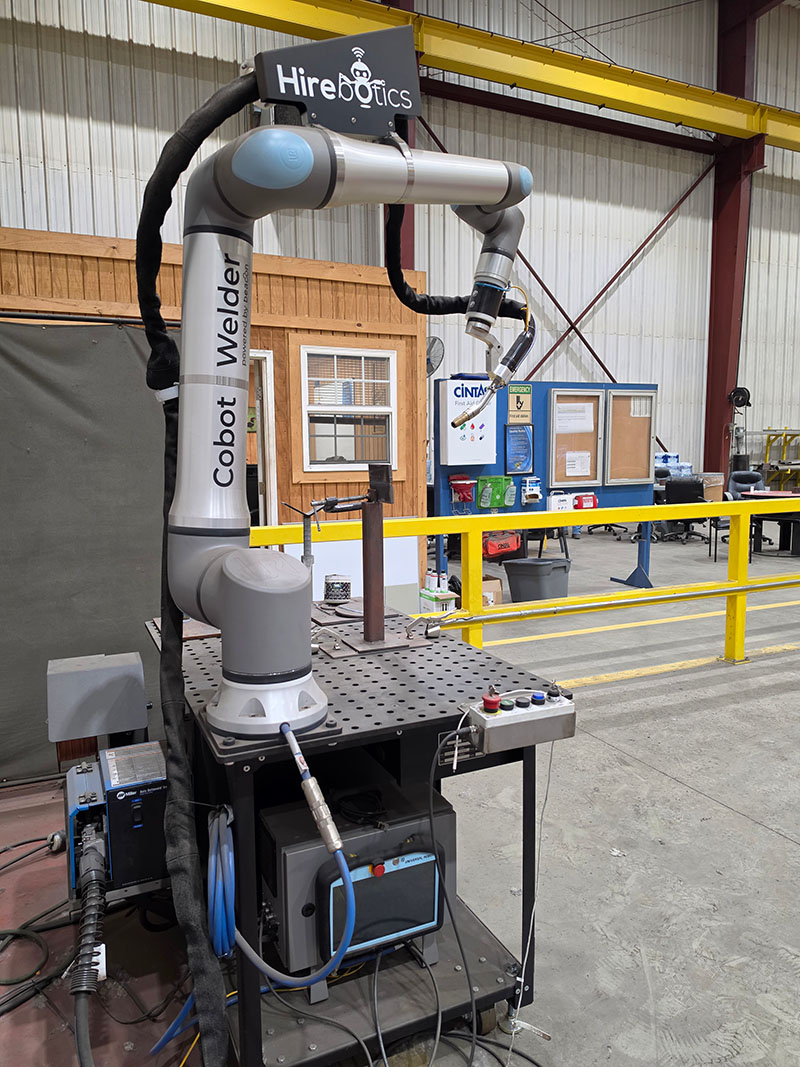 Built for Repeatable Manufacturing
Some welded components require the same weld to be performed hundreds or thousands of times. Maintaining consistency across every part can become challenging as production volumes increase.
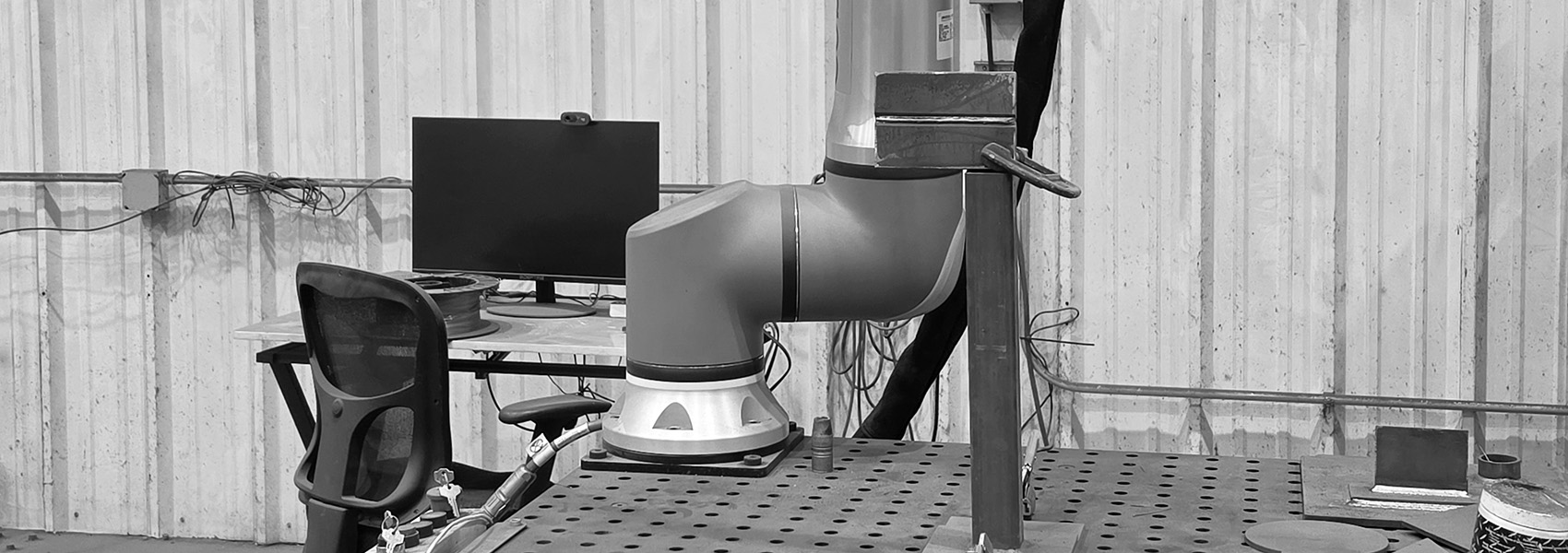
To support repeat manufacturing, Abtrex utilizes the UR20 Collaborative Robot as part of our welding process. This advanced collaborative welding system works alongside our AWS and ASME certified welders to improve consistency, support production capacity, and maintain repeatable welding parameters across production runs. The UR20’s extended reach and flexibility allow it to perform precise welding on a variety of part geometries while maintaining consistent results.
This allows our welders to focus on setup, quality control, inspection, and complex fabrication while automated welding processes handle repetitive production tasks.
The result is a manufacturing process designed to support:
- Consistent weld quality
- Repeatable production runs
- Reduced production variability
- Reliable lead times
- Scalable manufacturing capacity
- Ongoing OEM and industrial production programs
- Applications
Abtrex’s automation-enhanced welding processes are well suited for a wide range of repeat-production and industrial fabrication projects, including:
- Production Weldments – Repeat parts requiring consistent weld quality from the first piece through the final production run. Examples include crossmembers, tailgates, hitches, brackets, bolsters, body assemblies, pump bases, motor mounts, and structural components used in trailers, and other transportation equipment.
- OEM Manufacturing – Components and assemblies produced on a recurring basis for equipment manufacturers and industrial customers. Typical applications include agricultural implements, cutter decks, A-frames, toolbars, wheel assemblies, guards, support frames, and other production weldments.
- Nozzle Welding – Precise and repeatable welding of nozzles, couplings, and similar components used in industrial processing, manufacturing, and equipment applications.
- Structural and Industrial Fabrication – Frames, supports, brackets, skids, platforms, guarding systems, and fabricated assemblies requiring repeatable welding processes. This includes equipment supports, access platforms, structural subassemblies, and process skid components.
- Material Handling and Construction Equipment – Production welding for skid-steer attachments, construction equipment, conveyor systems, and bulk-material handling equipment. Typical components include buckets, grapples, mounting plates, fork frames, conveyor frames, hoppers, chutes, idler stands, and support structures.
- Waste, Recycling, and Industrial Equipment – Repeatable welding for compactor boxes, baler frames, doors, hopper assemblies, battery boxes, protective guards, container components, and other fabricated equipment used in industrial and municipal applications.
- Electrical and Infrastructure Components – Fabrication of transformer tanks, bases, lids, radiator frames, cabinets, mounting structures, and other welded components where consistency, capacity, and schedule performance are critical.
- Data Center and Infrastructure Components – Production welding for projects where consistency, capacity, and schedule performance are critical. Applications include equipment supports, structural frames, mounting systems, and fabricated assemblies used in infrastructure and mission-critical facilities.
Why Automation Matters
By integrating collaborative robotic welding into our fabrication process, Abtrex can increase production efficiency, improve consistency, and support larger production requirements while maintaining quality standards and experienced human oversight.
This approach helps create a more dependable manufacturing process for customers with repeat-production needs.
But, technology does not replace craftsmanship. Every project still relies on experienced welders to develop procedures, verify quality, monitor production, perform inspections, and handle complex fabrication work. Automation simply allows repetitive welding operations to be completed with greater consistency while skilled personnel focus on the work where experience delivers the most value.
The UR20 Collaborative Robot
The UR20 Collaborative Robot is a next-generation robotic welding system designed for precision industrial applications. Its extended reach, flexible programming capabilities, and smooth motion control allow it to support consistent, repeatable welding across a wide range of applications. The system can be integrated with custom fixtures and manufacturing processes to support both short production runs and ongoing manufacturing programs.
- Reach – 68.9 in (1,750 mm)
- Payload – 44.1 lb (20 kg), up to 55 lb (25 kg) with boundary conditions
- Degrees of Freedom – 6 rotating joints
- Repeatability – ±0.0039 in (±0.1 mm)
- Max TCP Speed– ~16.4 ft/s (5 m/s)
- Footprint – 9.65 in diameter (Ø 245 mm)
Industries Served
Abtrex supports customers across a variety of industries, including:
- Industrial manufacturing
- OEM equipment production
- Agricultural equipment
- Construction and skid-steer attachments
- Trailer, dump body, and refuse body manufacturing
- Material handling equipment
- Conveyor and bulk-material systems
- Waste and recycling equipment
- Process equipment fabrication
- Electrical and transformer equipment
- Data center construction
- Infrastructure projects
- General industrial fabrication
Request a Quote
Looking for a fabrication partner capable of supporting repeat-production welding requirements?
Contact Abtrex to discuss your project, production volumes, and delivery requirements. Our team can help determine whether automation-enhanced welding is the right fit for your application.
Contact our Engineers
Why Abtrex?
- AWS & ASME Qualified
- 5 Decades of Growth and Experience
- Turnkey Abilities
- Proven Project Management Skills
- Numerous Strategically Located Bases of Operation
- 24 Hour Emergency Response
- Commitment to Continual Improvement
Frequently Asked Questions
How do I find a welding supplier that can handle repeat production work?
Abtrex supports repeat-production welding projects for OEMs, manufacturers, and industrial customers that require consistent quality across recurring orders. Our automation-enhanced welding capabilities help maintain repeatability while supporting ongoing production schedules.
What should I look for in a supplier for high-volume welded assemblies?
Abtrex believes the most important factors are consistency, quality control, capacity, and delivery performance. For projects involving hundreds or thousands of identical components, a supplier should have the processes and production capability to maintain quality throughout the entire production run.
How can manufacturers improve consistency across repetitive weldments?
Abtrex utilizes automation-enhanced welding processes to help maintain consistent weld parameters across repetitive production work. Combined with skilled welders and quality control procedures, these processes help reduce variability between parts and production runs.
What types of welding projects are best suited for automation?
Abtrex typically recommends automation-enhanced welding for projects involving repeatable weld geometry, recurring assemblies, and production quantities of identical parts. Applications such as nozzle welding, production weldments, OEM components, and recurring fabrication programs are often strong candidates.
Can robotic welding help reduce production bottlenecks?
Abtrex uses collaborative robotic welding technology to support production capacity on repetitive welding applications. Automation can help increase throughput on repetitive weldments while allowing skilled welders to focus on quality control, setup, and more complex fabrication work.
What is the best welding process for manufacturing identical parts?
Abtrex often utilizes collaborative robotic welding for projects requiring large quantities of identical components. Repeatable welding programs help maintain consistency from the first part through the final production run while supporting production efficiency.
How do manufacturers scale welding capacity without sacrificing quality?
Abtrex combines skilled welders with collaborative robotic welding technology to help support higher production volumes while maintaining quality standards. This approach is particularly effective for repeat manufacturing programs and recurring production orders.
What is collaborative robotic welding?
Abtrex utilizes collaborative robotic welding as part of its advanced welding capabilities. Collaborative welding systems work alongside skilled welders to perform repeatable welding operations while experienced personnel remain responsible for setup, inspection, quality verification, and complex fabrication.
When does robotic welding make sense instead of manual welding?
Abtrex typically sees the greatest benefit from robotic welding when projects involve recurring parts, identical welds, repeat production runs, or higher-volume manufacturing requirements. Manual welding remains essential for many custom fabrication and complex welding applications.
What industries benefit from repeat-production welding?
Abtrex provides repeat-production welding services for manufacturers of trailers, agricultural equipment, construction attachments, material-handling systems, process equipment, electrical equipment, and other industrial products requiring consistent welding across multiple units. Our automation-enhanced welding capabilities are particularly well suited for components such as crossmembers, hitches, brackets, support frames, conveyor structures, transformer tanks, equipment bases, and welded assemblies produced in recurring production runs.