Hydrofluoric Acid Corrosion: Where Rubber Linings Fit and Why They Work
Few chemicals demand as much respect as hydrofluoric acid. It is used across steel pickling, glass etching, semiconductor manufacturing, metal cleaning and refinery alkylation. Yet the same properties that make it so useful also make it one of the hardest chemicals to contain.
For plant owners, the risk is twofold. A failed tank or pipe means lost production and costly repairs. A leak also puts workers and the surrounding environment in danger. Knowing what makes hydrofluoric acid (HF) so aggressive is the first step toward choosing materials that hold up. For aqueous HF up to about 70%, where carbon steel corrodes quickly, a properly installed rubber lining is a proven and economical form of protection.
What Makes Hydrofluoric Acid So Corrosive?
On paper, HF is a weak acid. In practice, it behaves very differently from acids like sulfuric or hydrochloric. The difference comes down to its fluoride ions.
Hydrofluoric acid reacts aggressively with silica and silicates. That is why HF is used to etch glass, and why glass, silica-based ceramics and brick, concrete and standard fiberglass-reinforced plastics are quickly attacked in HF service. Fiberglass equipment can handle dilute HF only when its acid-facing layer is built with synthetic fibers instead of glass (like nexus). Many materials considered acid resistant in other applications simply do not hold up here.
Metals are not safe either. Below about 70% HF, carbon steel corrodes quickly. Solutions under about 60% attack it rapidly even at low temperatures, and corrosion speeds up as temperature rises. Stainless steels resist HF no better than carbon steel and can suffer stress corrosion cracking, while specialty alloys that perform well are expensive to build with. Bare carbon steel faces a second problem: HF drives hydrogen into the metal, causing blisters and cracks, and hard weld zones are especially vulnerable.
That is why steel equipment for aqueous HF is lined, and a properly installed rubber lining is a proven way to protect it. What matters is installation quality: a pinhole or a poorly sealed seam or nozzle could let acid reach the steel and spread behind the lining, out of sight. To catch defects like these, Abtrex checks the entire lining with high-voltage holiday detection, so pinholes are found and repaired before the equipment goes into service.
Concentrated hydrofluoric acid also gives off toxic hydrogen fluoride fumes, so any breach of containment becomes a safety issue, not just a maintenance one.
Rubber Lining for Hydrofluoric Acid Service
On paper, HF is a weak acid. In practice, it behaves very differently from acids like sulfuric or hydrochloric. The difference comes down to its fluoride ions.
Hydrofluoric acid reacts aggressively with silica and silicates. That is why HF is used to etch glass, and why glass, silica-based ceramics and brick, concrete and standard fiberglass-reinforced plastics are quickly attacked in HF service. Fiberglass equipment can handle dilute HF only when its acid-facing layer is built with synthetic fibers instead of glass. Many materials considered acid resistant in other applications simply do not hold up here.
Metals are not safe either. Below about 70% HF, carbon steel corrodes quickly. Solutions under about 60% attack it rapidly even at low temperatures, and corrosion speeds up as temperature rises. Stainless steels resist HF no better than carbon steel and can suffer stress corrosion cracking, while specialty alloys that perform well are expensive to build with. Bare carbon steel faces a second problem: HF drives hydrogen into the metal, causing blisters and cracks, and hard weld zones are especially vulnerable.
That is why steel equipment for aqueous HF is lined, and a properly installed rubber lining is a proven way to protect it. What matters is installation quality: a pinhole or a poorly sealed seam or nozzle could let acid reach the steel and spread behind the lining, out of sight. To catch defects like these, Abtrex checks the entire lining with high-voltage holiday detection, so pinholes are found and repaired before the equipment goes into service.
Concentrated hydrofluoric acid also gives off toxic hydrogen fluoride fumes, so any breach of containment becomes a safety issue, not just a maintenance one.
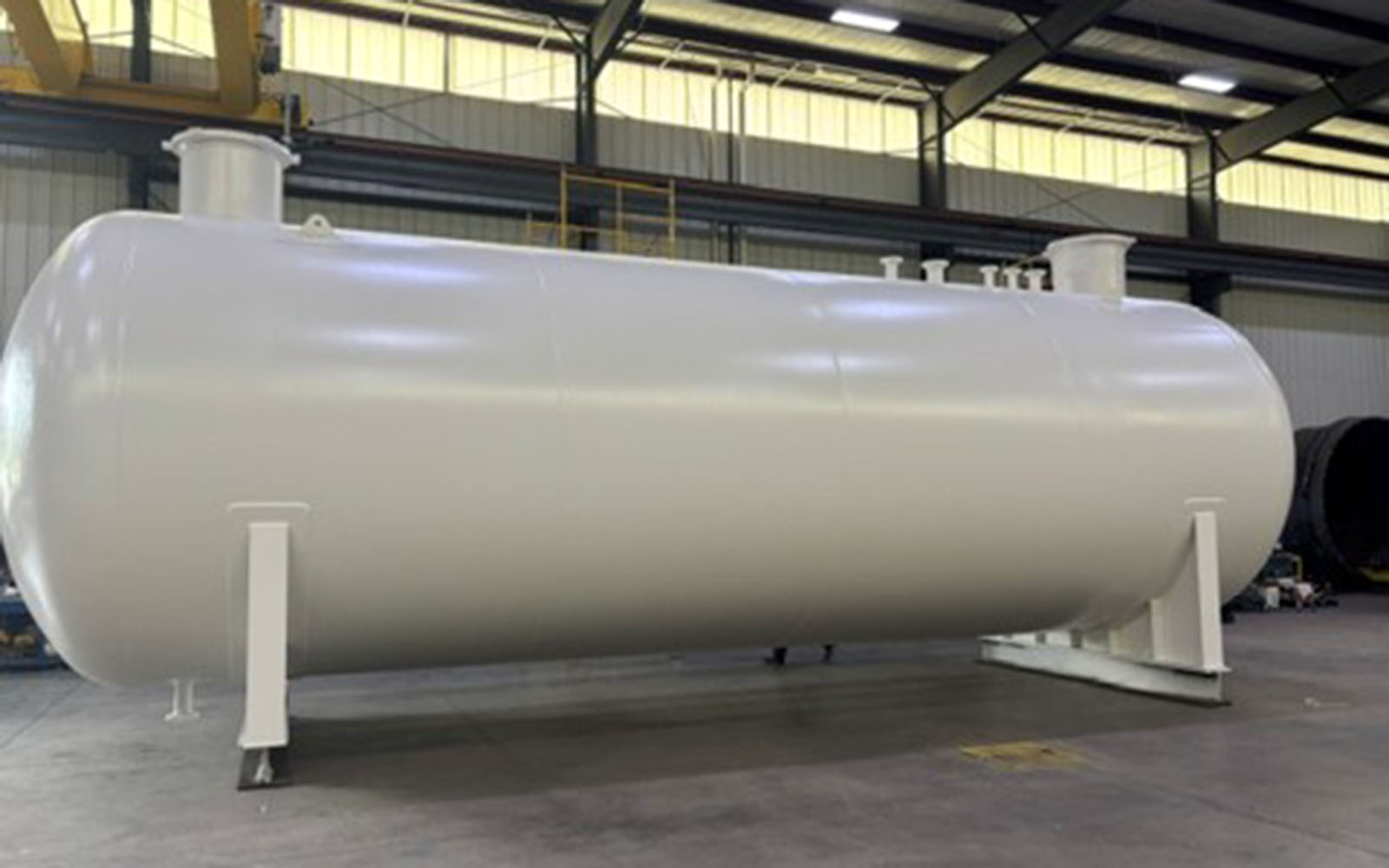
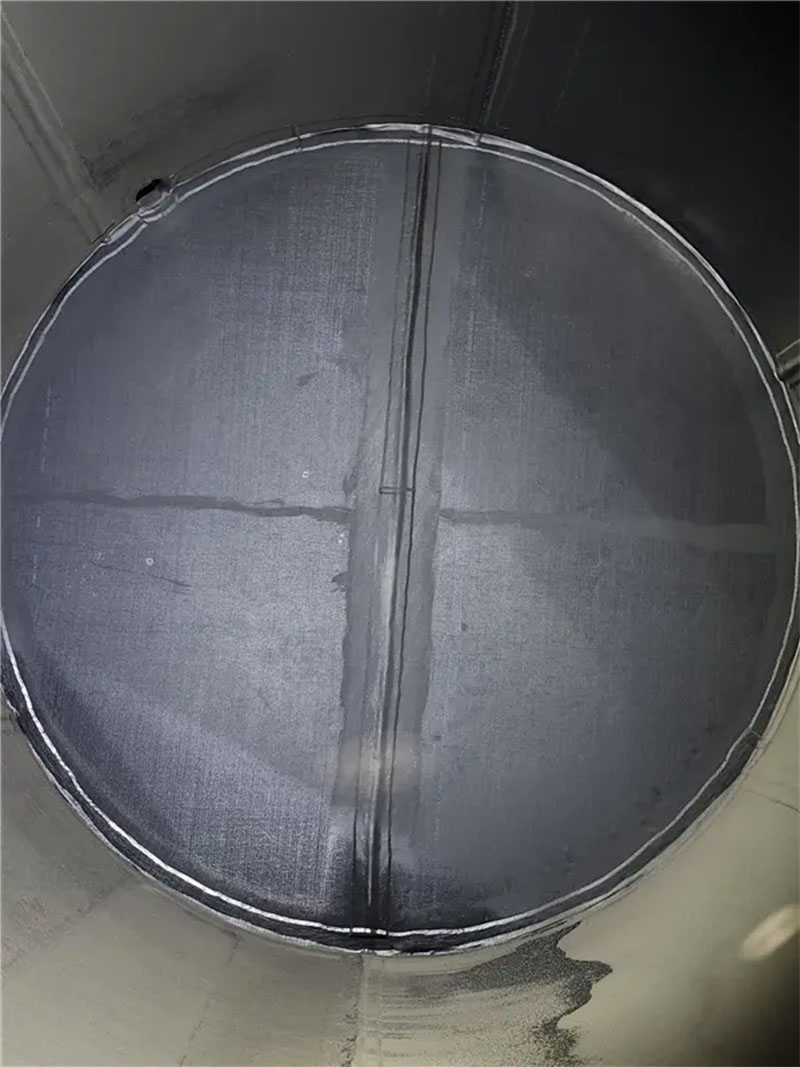
Rubber Lined Hydrofluoric Service Tank
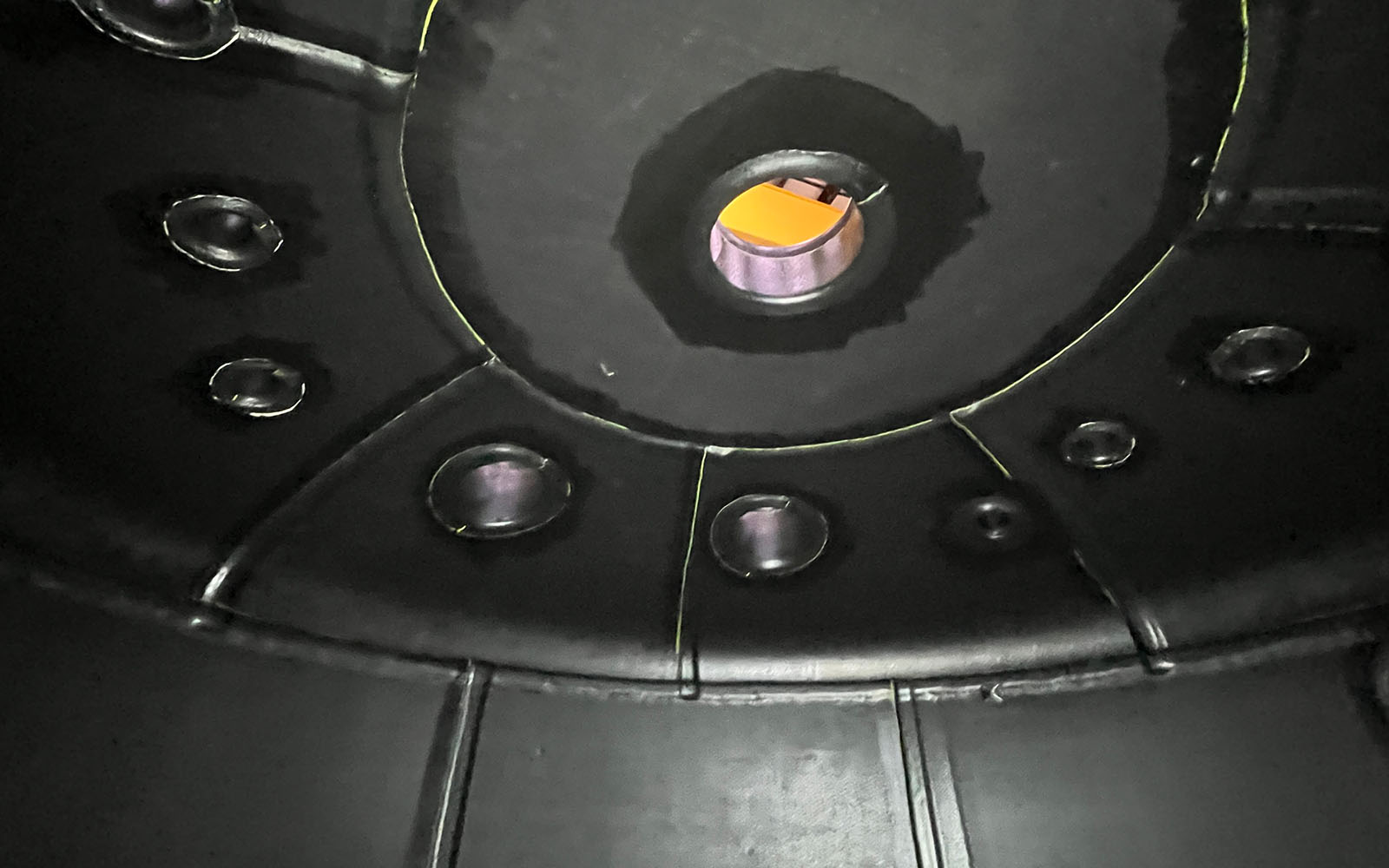
Chlorobutyl Rubber Lining for HF Service
Cap Strips: Sealing the Weakest Point
A rubber lining is only as strong as its seams. Seams join individual rubber sheets, and in HF service they are among the most likely places for acid to reach the steel.
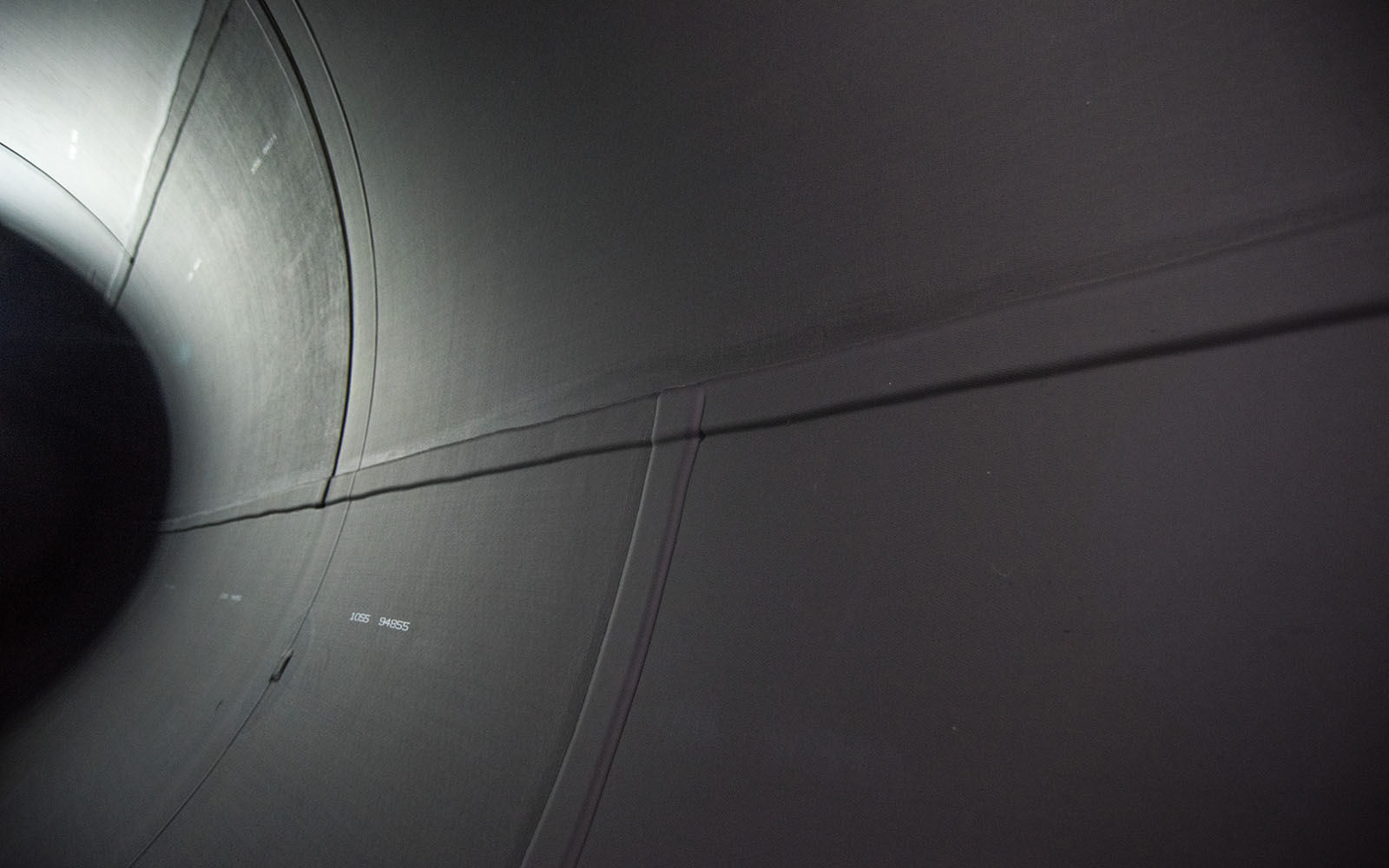
For critical service like HF, Abtrex often uses skive butt joints reinforced with cap strips. A cap strip is a 4-inch-wide, 1/8-inch-thick strip of uncured rubber applied over the butt joint. It is installed after the joint is spark tested and de-aired, then cured together with the rest of the lining.
Cap strips add a second barrier over every seam. If the primary joint begins to degrade, the cap strip keeps the acid away from the substrate. They also reduce the risk of trapped air at the seam. Cap strips take more material, time and skill than standard lap joints, but in hydrofluoric acid service that extra layer is well worth it. You can learn more in our guide to seam types in rubber linings.
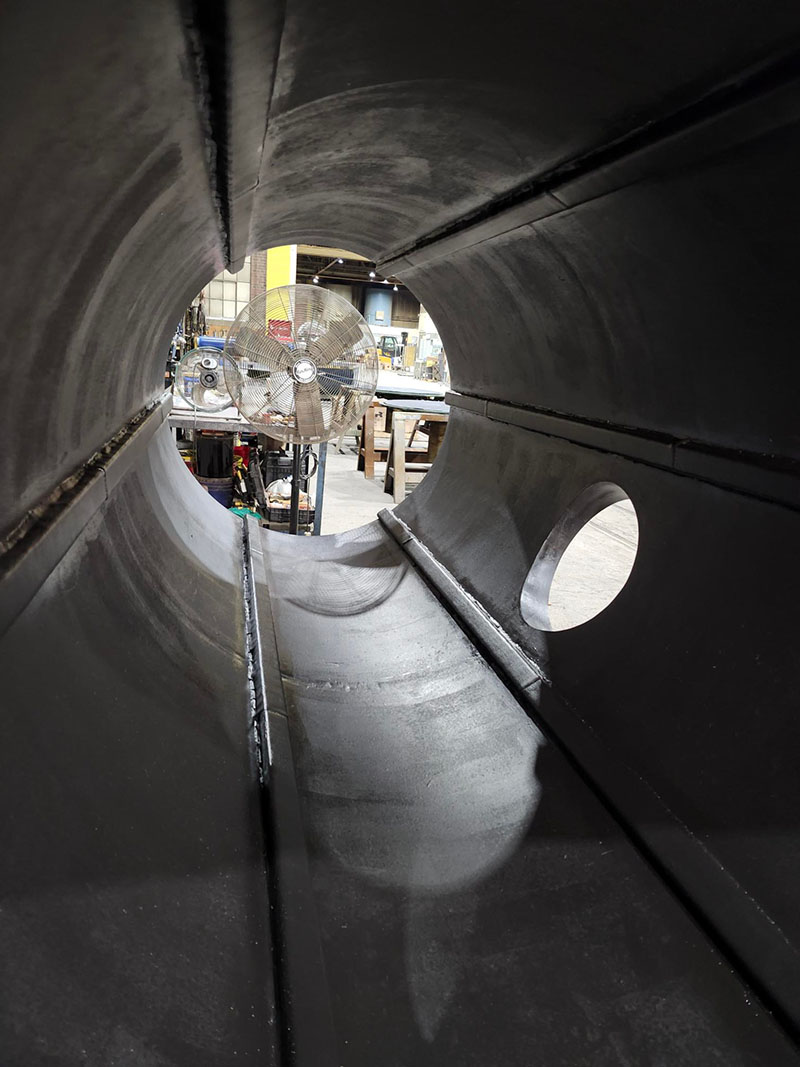
Cap Strips Over the Seams
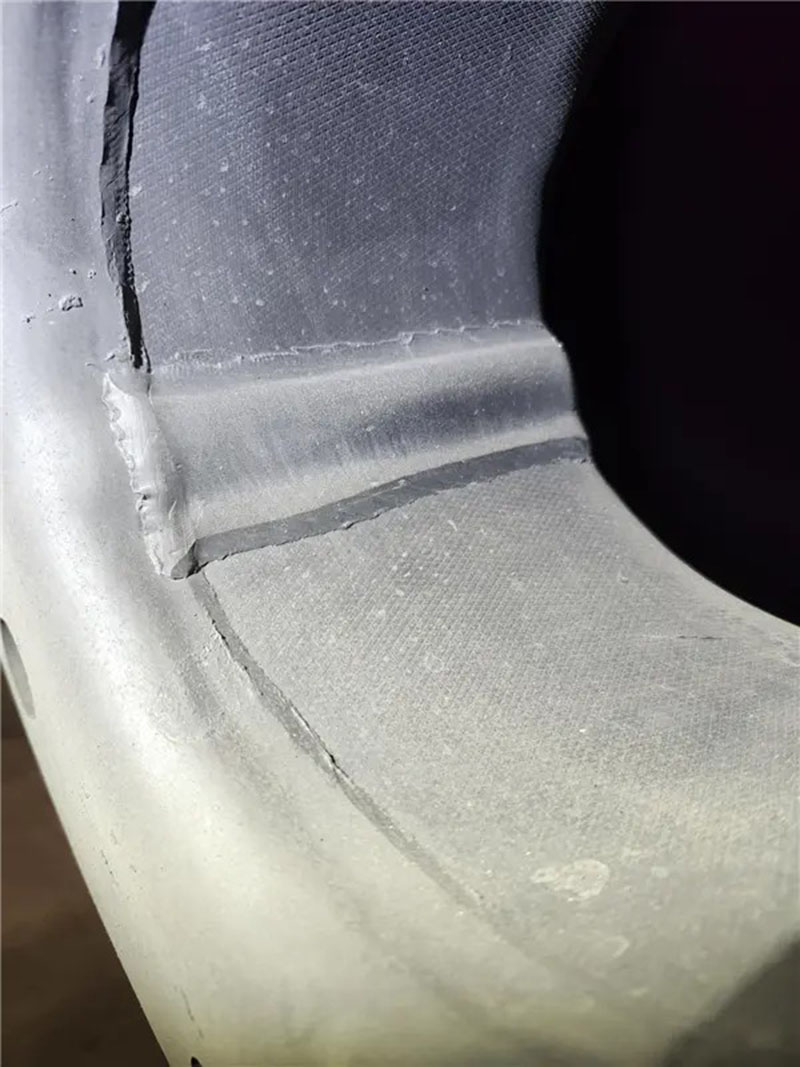
Cap Strip
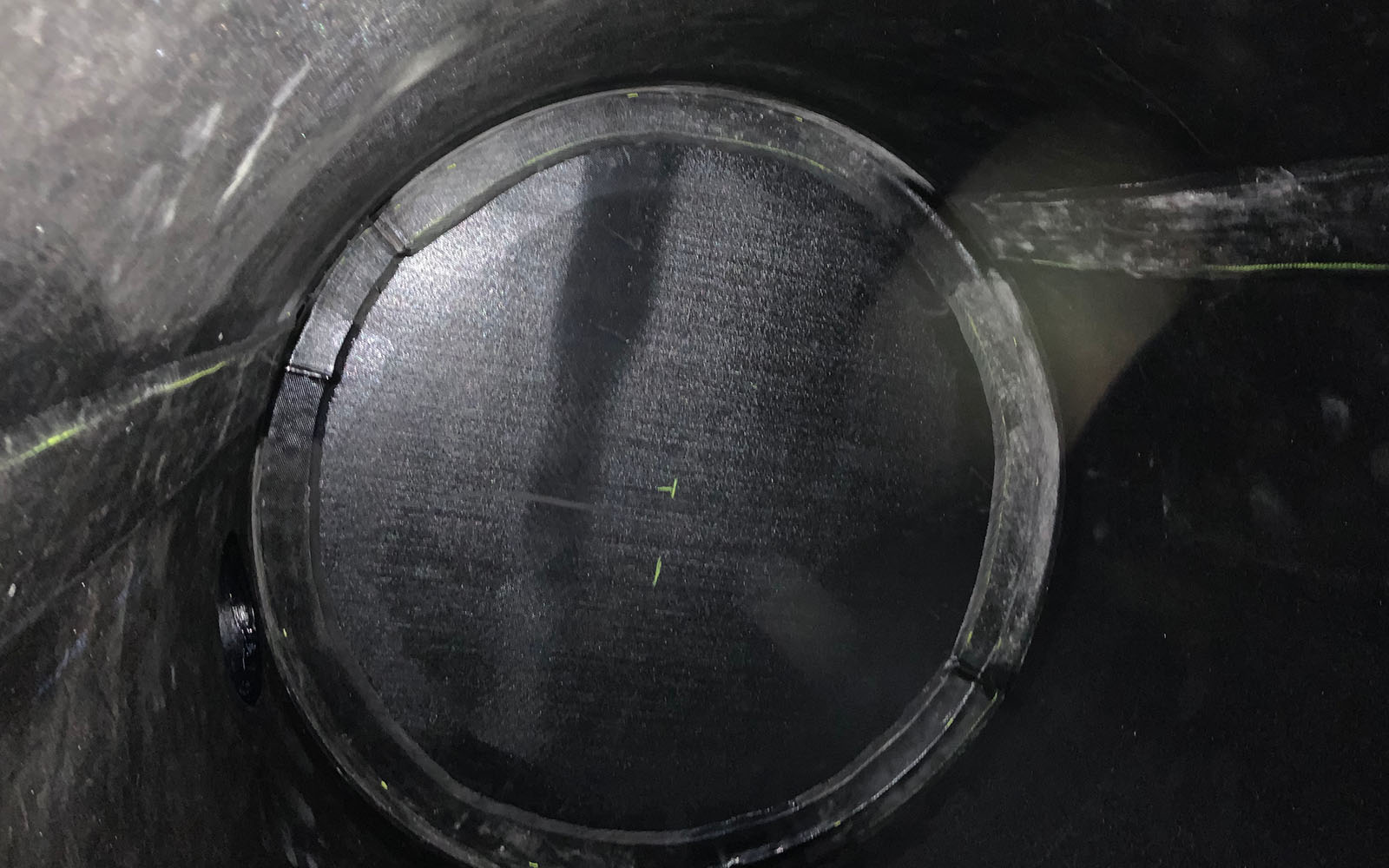
Cap Strips
Handling HF Safely
Equipment protection and people protection go hand in hand. HF exposure is dangerous because the acid penetrates skin and the fluoride ions bind calcium in the body. Burns may not hurt right away, which can delay treatment.
Good practice when handling HF includes:
- Wearing the right personal protective equipment PPE, including HF-rated gloves, chemical splash safety glasses, face shield, chemical apron, long sleeves and closed toe shoes.
- Hydrofluoric acid could pass the skin tissue to target calcium in your body and bones. Keeping calcium gluconate gel at every work area, so first aid can start immediately after skin contact.
- Stocking an HF-specific spill kit with calcium-based neutralizers, such as calcium carbonate, which bind fluoride into a more stable compound. Never use sand or other silica-based absorbents, which react with HF to release a toxic gas.
- Training workers on emergency procedures and rehearsing emergency responses, including evacuation if HF gas is released.
Always follow the product SDS and your site safety program. A reliable lining reduces the chance of leaks, but it never replaces safe work practices.
Long-Term Hydrofluoric Acid Protection with Abtrex
Even the best lining needs regular care. Routine inspections, including visual checks for blisters, cracks and swelling, hardness readings and holiday detection, find pinholes and weak spots before acid reaches the steel. Catching damage early keeps repairs small and downtime short.
At Abtrex Industries, our rubber lining experts bring five decades of experience in material selection, seam design and installation. We line tanks, pipe and railcars in our shop, and our field crews handle repairs and relines on site. When something goes wrong, our emergency service responds within 24 hours, 365 days a year.
Need a lining that stands up to HF? Contact Abtrex today to speak with one of our experts or request a quote for your next project.